SoWhoCaresAnyway
So Who Cares Anyway with host Ruth Germaine with her inspirational guest speakers will explore the incredible work and initiatives being undertaken in and with health and social care, as well as voluntary and community-based groups. We’ll discuss why their work matters and what difference they make to the people in their communities. I will also invite individuals with key messages or ideas about what needs to happen to significantly enhance our communities health and well-being. To improve the health and wellbeing of people and achieve integrated care that focuses upon what matters to people, and what works for them, we all need to share learning, ideas and innovation, broadening our perspective of who cares, what they do and the difference that they make. My hope is that this podcast will provide a space for people to inspire and be inspired. So, if you have a passion to make a difference to the health and well-being of your communities, join me, tune in and listen. To find out more about me, or to Buy Me A Coffee to support this podcast visit https://linktr.ee/Reflective_Ruth
Listen on:




Episodes
Thursday May 22, 2025
Thursday May 22, 2025
“Are you ready to stop looking for problems to fix and start asking the right questions? What matters most to you, and how can I help you achieve that?”
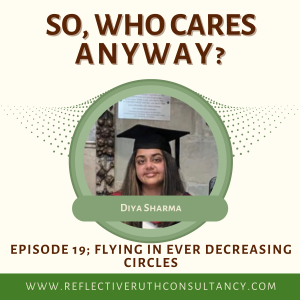
In this episode of So Who Cares Anyway, I speak with Diya Sharma, a postgraduate researcher, associate lecturer at Canterbury Christchurch University, and advocate with Muscular Dystrophy UK. Diya’s journey challenges deep-seated assumptions about disability, happiness, and autonomy, demonstrating that true freedom begins with choice, not circumstance.
Despite facing ongoing physical and social barriers, Diya refuses to be defined by her wheelchair. Her passion for travel pushes against societal expectations, proving that accessibility isn’t just about infrastructure—it’s about changing mindsets. While misconceptions about disability have affected her own social well-being, Diya has cultivated resilience, pursued academic excellence, and become a strong advocate for others, encouraging them to reclaim their right to freedom of movement.
This episode explores:
How society often assumes what people need instead of asking what matters to them.
The right to freedom of movement and how Diya is shaping conversations around inclusion.
Why people with disabilities are often viewed through a lens of limitations rather than possibilities.
How support should focus on empowerment—not deficits.
Diya’s story is a reminder that true inclusivity means listening, understanding, and removing barriers—not making assumptions about what people can or cannot do. By shifting the conversation from “What do you need?” to “What matters to you, and how can I help you achieve that?”, we unlock opportunities for everyone to thrive.
Show resources;
https://www.musculardystrophyuk.org/
https://www.scope.org.uk/
Thursday May 15, 2025
Thursday May 15, 2025
Are you ready to have a friendly conversation to discover people for who they are?
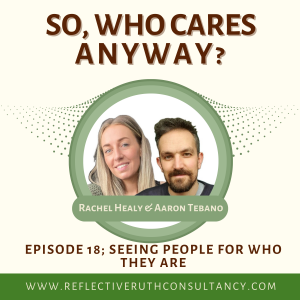
In this episode of #SoWhoCaresAnyway, I chat with and Aaron Tebano, two inspiring Learning Disability Student Nurses from the University of Winchester. They are advocating for the profession of Learning Disability Nursing to empower, support, and advocate for people rather than define them by their challenges.
Together, we discuss:
The importance of not losing sight of people. Friendly conversations help us recognise individuals for who they truly are—seeing their strengths, passions, and aspirations rather than asking, “What’s wrong with them?”
Why giving people time to shine leads to more meaningful, person-centred care.
How positive choices and empowerment shape better outcomes for people with learning disabilities.
The impact of advocacy and problem-solving in Learning Disability Nursing and why we need more Learning Disability Nurses.
Rachel and Aaron share their insights on how Learning Disability Nurses make a difference, supporting people and their carers with care, compassion, and creativity.
Show Resources
Makasong choir - Makasong – Makaton Signing Choir - TALKmoreCORNWALL CIC
Time2Shine - Time2Shine | Cornwall Accessible Activities Programme
'Nursing According to Us' podcast - Learning Disability Nursing..... According to us! - Nursing according to us. | Podcast on Spotify
Promotional video for LD Nursing at Winchester - University of Winchester learning disability nursing
Makaton video by Winchester nurses for International Nurses Day - Treat People with Kindness (Harry Styles) - Makaton - for International Nurses Day
Positive Choices Reflections on the Positive Choices Winchester conference | Blogs | Royal College of Nursing

Friday May 09, 2025
Friday May 09, 2025
Are you ready to take a challenge, starting conversations with three people in your own community?
In this episode I am delighted to be joined by Cormac Russell, a global leader in Asset-Based Community Development (ABCD). In this episode we explore how communities can shift from focusing on needs and deficits to recognising strengths and assets, ensuring change is driven by local people, relationships, and existing resources. Cormac talks about how, by ensuring that people are defined by their gifts they can actively contribute and interact within their own community. Cormac explains the true meaning of community, love, friendship and being there for each other. Starting with what’s strong, not wrong we all need to consider, ‘Is there a community solution to this problem before we start institutionalising somebody or before we start moving into a clinical intervention, might there be a non-medical way?’
This episode has something for everyone who cares about their communities, as Cormac shares stories, experiences and insights about
- What Asset-Based Community Development (ABCD) means in practice and how to embed this in practice
- How communities can build on their strengths and assets, as a way to address their concerns
- The importance of citizen-led initiatives in creating sustainable change
- Practical ways professionals can support community-led development without taking over
- The connection between loneliness and feeling useless—why social inclusion matters
- How communities can take action to reclaim public spaces and foster belonging
- Why young people often feel "tired", the hidden link to social disconnection
Cormac Russell is the Founding Director of Nurture Development and a member of the ABCD Institute at DePaul University . With over 25 years of experience, he has trained communities, agencies, and governments in strength-based approaches to development. He is also the author of books such as Rekindling Democracy, The Connected Community, and Asset-Based Community Development: Looking Back to Look Forward.
Resources & Links
- Cormac Russell and Dr Sasha DeWolfe’s podcast The Connected Community
-Learn more about Cormac Russell’s work at [Nurture Development] Nurture Development
- Find out more about Cormac Russell's books
- Watch Cormac’s TEDx talk on community-led change
- BBC Survey on loneliness trends among different age groups Who Feels Lonely? The results of the world's largest loneliness study
- Nigel Crisp’s book on community health creation vs. hospital-based care community health creation vs. hospital-based care
- Buurtzorg healthcare.
-Join Cormac for a discussion on Child Welfare Through a Community-Centered Lens
Thursday May 01, 2025
Thursday May 01, 2025
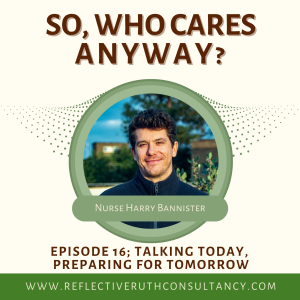
In this episode, I have the pleasure of speaking with Harry Bannister, a Specialist Nurse in Organ Donation, Who works for NHS Blood and Transplant. Amongst other things Harry talks about how he guides families through some of the hardest moments of their lives, reflecting on the weight of these conversations, where families are asked to make life-changing decisions while navigating overwhelming grief.
Harry highlights the importance of fully understanding organ donation and having conversations with loved ones. Preparing for what we hope will never happen, but knowing decisions are best made in advance
Harry explains the emotional labour of his work, describing how specialist nurses must balance clinical precision with deep human empathy. He shares how reading letters from recipients, families whose children or loved ones have regained their lives thanks to a transplant, can be both heart warming and heart breaking. Knowing that organ donation offers hope in tragedy helps sustain him through the difficult moments, but the reality of these discussions never becomes easy.
The conversation also highlights the psychological weight of working in intensive care, particularly during the Covid pandemic, and the complex feelings of burnout and guilt that many healthcare professionals experience.
This episode explores resilience, grief, and the profound emotional labour of healthcare, offering a raw and honest look at the complexities of working intensive care and organ donation.
Thursday Apr 24, 2025
Thursday Apr 24, 2025
What if healthcare wasn’t just about clinical expertise and procedures, but about learning within communities and building networks to truly understand people's needs?
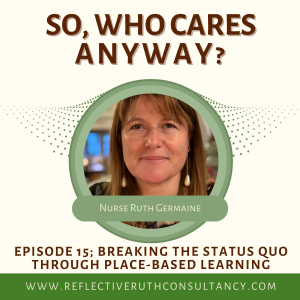
In this solo episode, I take you on a swift tour of my personal journey—one that started with a childhood dream of nursing and evolved into a mission to reshape how learning happens to meet the needs of people in ways that work for them. From frontline nursing in the 1980s to leading place-based learning initiatives, I explore how embedding learning cultures within systems can drive people-centred, integrated care.
In this episode I talk about
My journey from frontline nursing to system leadership
What place-based learning really means—moving beyond workplace learning to learning in the place
The three core values that emerged from my Darzi Project:
People-centred learning
education that supports how we meet the needs of people in our communities in ways that work for them
creating education and learning environments that work for people providing care
Cultures of learning in teams—creating environments that encourage questioning, reflection, and growth
Networks for learning together—expanding education beyond organisations into communities and wider systems
How training hubs, community education facilitators, and cross-sector partnerships are shaping a new approach to learning in healthcare
Why stepping beyond traditional structures led me to found Reflective Ruth Consultancy and this podcast
Call to Action:
I challenge you to rethink learning, embrace collaboration, and take action—whether in healthcare or beyond. Support the #DoWith movement, build learning networks, and stay curious.
Resources;
https://www.kingsfund.org.uk/insight-and-analysis/projects/do-with
https://arc-kss.nihr.ac.uk/news/blog-achieving-people-centered-integrated-care-through-place-based-learning
https://arc-kss.nihr.ac.uk/news/blog-achieving-people-centered-integrated-care-through-place-based-learning
Thursday Apr 17, 2025
Thursday Apr 17, 2025
Are you ready to be curious, listen to naïve questions and explore the answers?
For too long, research has been seen as something reserved for “clever people,” locked behind academic walls and inaccessible to frontline healthcare workers. But what if research was really just about asking the right questions—even the seemingly naïve ones?
In this episode, Claire Pegg, joins me on #SoWhoCaresAnyway breaking down the mystique of research, redefining it as an act of curiosity rather than expertise and taking a wider systems thinking #DoWith perspective. Together we explore how research transforms healthcare, why nurses, midwives, and AHPs deserve a bigger seat at the table, and how simply questioning what we accept as truth can lead to real-world innovation.
Claire shares her own journey from intensive care nurse to her influential roles as a research leader. Claires roles include RRDN Health and Care Director for Nursing, Midwifery and Allied Health Professionals with the National Institute of Health Research Workforce and People Senior Manager NHS England South East and Programme Lead - Nursing and Midwifery Research Leadership South East Regional Research Delivery Network
If you’ve ever thought research was not for you, or is irrelevant, this conversation might just change your mind.
Show resources;
SORT - https://www.england.nhs.uk/long-read/self-assessment-of-organisational-readiness-tool-sort-guide/
* Multi-professional research capability framework https://advanced-practice.hee.nhs.uk/our-work/research/multi-professional-practice-based-research-capabilities-framework/
* Poster for sign up for the Advancing practice COP
* NIHR website for development opportunities https://www.nihr.ac.uk/about-us/who-we-are
Related research
Research led by nurses and the contributions they make as members of multidisciplinary research teams can drive change (Shepherd et al., 2022) https://www.england.nhs.uk/nursingmidwifery/research-and-evidence/
Evidence from research influences and shapes the nursing profession and informs and under pins policy, professional decision making and nursing actions (Shepherd et al., 2022)
There is a positive association between engagement in research by healthcare organisations and improvements in healthcare performance (Boaz et al., 2015)
There is significant association between clinical research activity, academic output and reduced patient mortality (Bennett et al., 2012; Ozdemir et al., 2015)
The relationship between nursing education and research with quality patient outcomes is clearly recognised (Henderson and Winch, 2008)
Academic-clinical collaborations promote a culture that challenges the status quo (Albert et al., 2019)
Thursday Apr 10, 2025
Thursday Apr 10, 2025
Are you ready to make mischief?
What if growing older wasn’t about limitations, but about possibilities? What if care focused not on what you can’t do, but on everything you still can?
In this episode of SoWhoCaresAnyway, I welcome Angela Catley, a passionate disruptor in social care, who has spent her career challenging the status quo and sparking bold conversations. Angela, with Sian Lockwood, is now leading conversations on When I Get Old to push for more choice, dignity, and purpose as we age.
In this episode we uncover the massive gap between what people hope for in their future care and what they actually experience today. Angela shares insights from her work, including World Café discussions, revealing a real appetite for innovative care models, from co-housing and intergenerational support to creative local services, cruise ship living, and the dream of a Marigold Hotel-style retirement.
But at the heart of it all, Angela focuses upon one thing: we all need to feel included, supported to be ourselves and useful, no matter our age. She argues that care models must empower people to contribute, to stay connected, and continue doing what makes them feel alive.
Join us for a thought-provoking, inspiring, and slightly mischievous conversation that might just change the way you think about aging.
Thursday Apr 03, 2025
Thursday Apr 03, 2025
Are you ready to listen to a story and uncover the untold?
In this episode of #SoWhoCaresAnyway, I explore with Paul Stepczak how co-production and asset-based community development can transform the way communities and services work together. At its core, this approach is about listening—not just hearing words, but truly understanding the stories behind the stories, gaining real insight into people, their lives, concerns, and what matters to them.
Recognising people as assets rather than problems to solve, Paul embraces a real #DoWith approach—where collaboration isn’t imposed but built with communities.
Paul shares his journey, starting with his work at The Prince’s Trust, supporting young entrepreneurs, before returning to his own community. Seeing deep inequalities, he dedicated himself to ensuring people are heard as equals. His experience led him to specialise in co-production and asset-based community development, and today, he works for CWMPAS, contributing to the Start Something Good Start Something Good project—an initiative delivering social hackathons to bring communities and services together for meaningful change.
In this episode, Paul, TEDx speaker, shares his five-point plan to ensure that co-production isn’t imposed but brings people together, giving everyone a voice to shape solutions through ongoing dialogue, ensuring long-term sustainability beyond the project itself.
Paul’s passion lies in listening to people and amplifying their voices, so come and listen—because understanding the stories behind the stories might just change everything.
Resources;
“Radical Help: How we can remake the relationships between us and revolutionise the welfare state” (2018) by Hillary Cottam https://www.hilarycottam.com/radical-help/
“The Tipping Point: How Little Things Can Make a Big Difference” By Malcolm Gladwell (2002) https://www.gladwellbooks.com/
https://www.kingsfund.org.uk/insight-and-analysis/projects/do-with
The ladder of co-production
Thursday Mar 27, 2025
Thursday Mar 27, 2025
Are you ready to take a walk and listen to the birds?
In this week’s episode of SoWhoCaresAnyway, I’m joined by James Metcalfe, CEO of the North York Moors Trust, to explore the transformative power of nature. With James we are taken on a journey to discover why reconnecting with the outdoors isn’t just a luxury but a crucial necessity for improving the health and wellbeing of individuals and communities.
James’s passion really shines through as he shares his journey from Westminster as an Advisor to a leader at the North York Moors Trust. Supporting people to overcome barriers to accessing outside spaces, working with Andys Man Club schools, and pupil referral units James demonstrate the profound difference these initiatives have made, inspiring hope and improving health and well-being in unexpected ways.
By embracing the outdoors and supporting others to do the same, we not just enriching lives—we transform health outcomes and building stronger, more connected communities.
James’s drive for meaningful change shines through, so join us for a journey of discovery and become a champion of the Natural Health Service
Thursday Mar 20, 2025
Thursday Mar 20, 2025
Are you ready to discover the true power of systems leadership?
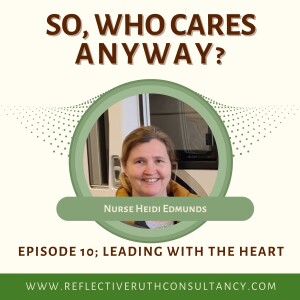
In this episode, I’m delighted to be joined by Heidi Edmunds, Clinical and Operations Manager at Whitstable Urgent Treatment Centre. Having known Heidi since 2016, I’ve had the privilege of witnessing her incredible journey and the transformative impact her leadership has had—not just on her team and organisation, but across the wider healthcare system.
Heidi’s story is one of growth, dedication, and innovation. With over two decades of experience in urgent and emergency care, she has evolved from a newly qualified nurse to a Nurse Consultant, driven by her passion for fostering supportive, development-focused environments. Her leadership embodies compassion and collaboration, creating networks that enable shared learning and effective system-wide collaboration.
In our conversation, Heidi shares insights on navigating the challenges of healthcare, from addressing burnout and clinical uncertainty to introducing clinical supervision as a safe space for staff support. As an advocate for workforce well-being, Heidi believes that supporting the team is key to delivering the best patient care.
We also explore her experiences with imposter syndrome, the importance of stepping into leadership roles, and how her distributed leadership approach supports the development of urgent treatment centres across Kent and Medway.
Join me for an inspiring discussion about how compassionate leadership, supported by strong networks, can transform individuals, teams, and systems. Heidi’s story is a powerful reminder of the impact of leading with heart and vision.
Show resources
Multiprofessional framework for advanced practice
Consultant Practice